1月19日,一场以“中医药进校园”为主题的文化体验活动在宁波工程学院举行。十余名来自不同国家的留学生主动报名参与,通过课堂讲授与沉浸式体验,近距离感受中医药的独特魅力。当天,浙江药科职业大学中药学院三位教师在寒冬中走进校园,将中医药文化带到留学生身边,也让这一承载着中华智慧的传统医学在跨文化交流中焕发新的活力。
On January 19, a cultural exchange activity themed "Traditional Chinese Medicine (TCM) on Campus" was held at Ningbo University of Technology. More than ten international students from different countries voluntarily signed up to participate, engaging in lectures and hands-on experiences that brought them closer to the world of TCM. On a cold winter day, three teachers from the School of Traditional Chinese Medicine at Zhejiang Pharmaceutical College traveled to the campus, bringing this ancient medical tradition directly to international students and injecting new vitality into cross-cultural exchange.
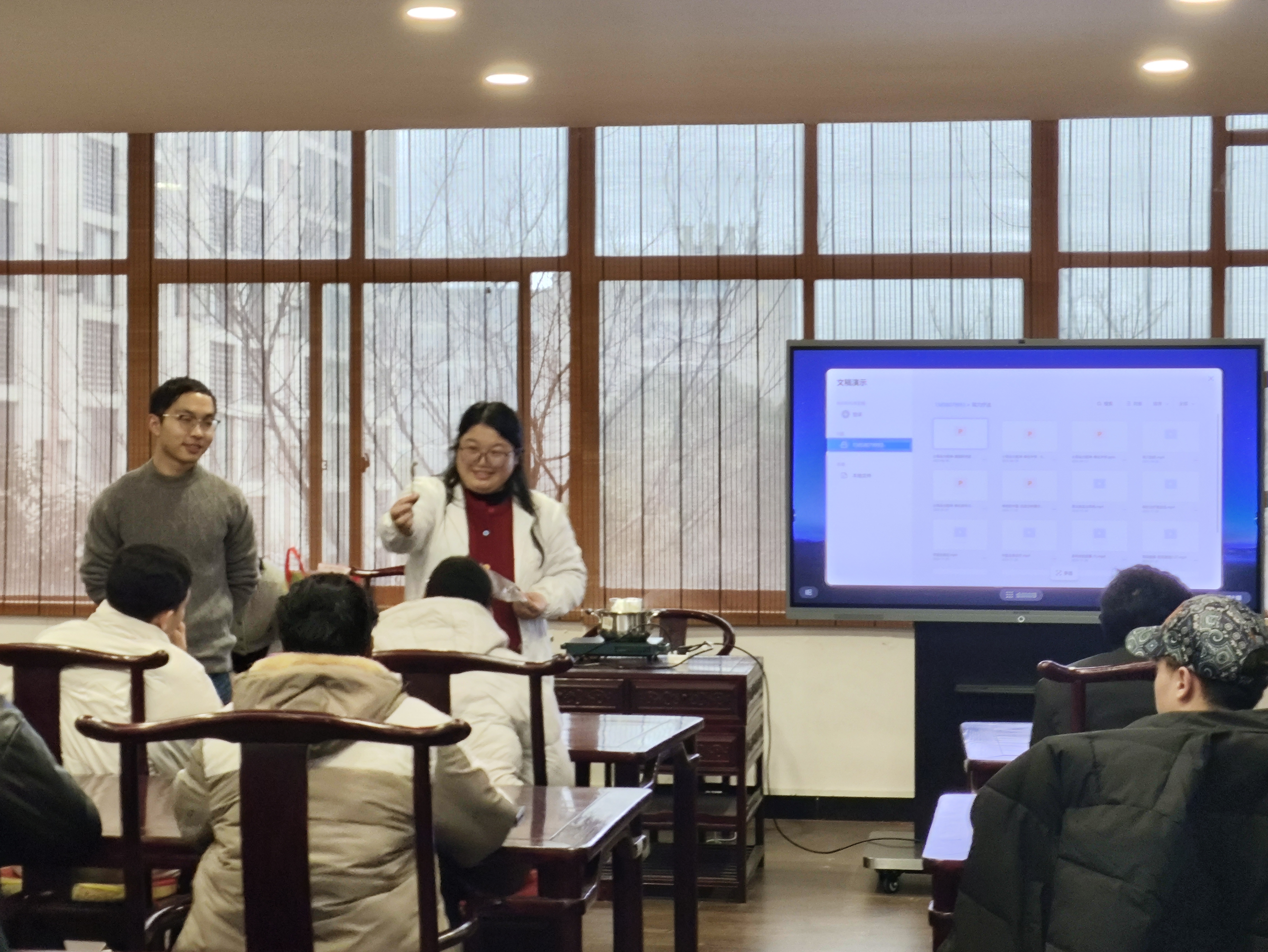
活动伊始,浙江药科职业大学中药学院沙秀秀老师作为主讲教师,围绕中药的来源、分类及基本功效展开系统讲解。课堂上,她通过实物展示与互动问答,向留学生介绍了多种中药原材料——既有来源于植物的草木花果,也有来自动物或天然矿石的药材。在老师的引导下,留学生们近距离观察、触摸中药材,猜测名称与用途,原本带着神秘色彩的中草药逐渐变得“可触、可感、可理解”。沙秀秀表示,她很高兴看到留学生们对中医药展现出的强烈好奇心和探索欲,“他们愿意主动了解、亲手体验,这本身就是中医药文化走向世界的一个美好开始。”
The activity began with a lecture delivered by Sha Xiuxiu, a teacher from Zhejiang Pharmaceutical College, who introduced the origins, classifications and basic functions of Chinese medicinal materials. Through real samples and interactive discussions, she presented a variety of herbs derived from plants, animals and natural minerals. Guided by the teacher, students observed and touched the materials, guessing their names and uses. What once seemed mysterious gradually became tangible and understandable. Sha noted that she was delighted to see the international students' strong curiosity and willingness to explore TCM, adding that "their enthusiasm for hands-on learning is a wonderful starting point for traditional Chinese medicine to reach a global audience."
在理论讲解的基础上,活动进一步走向实践体验。随后,一位中医教师向留学生介绍了耳穴埋豆疗法的历史渊源、基本原理及临床应用,并借助标注着密集穴位的人耳模型,讲解不同耳穴与人体器官之间的对应关系。留学生们认真聆听,不时提问,对这种将身体视为整体调理系统的中医理念表现出浓厚兴趣。
Building on the theoretical introduction, the activity moved into practical experience. Another TCM instructor introduced the history, principles and applications of auricular acupressure therapy, using a detailed ear model marked with numerous acupoints to explain how different points correspond to specific parts of the body. The holistic approach of TCM attracted great interest among the students, who listened attentively and actively raised questions.
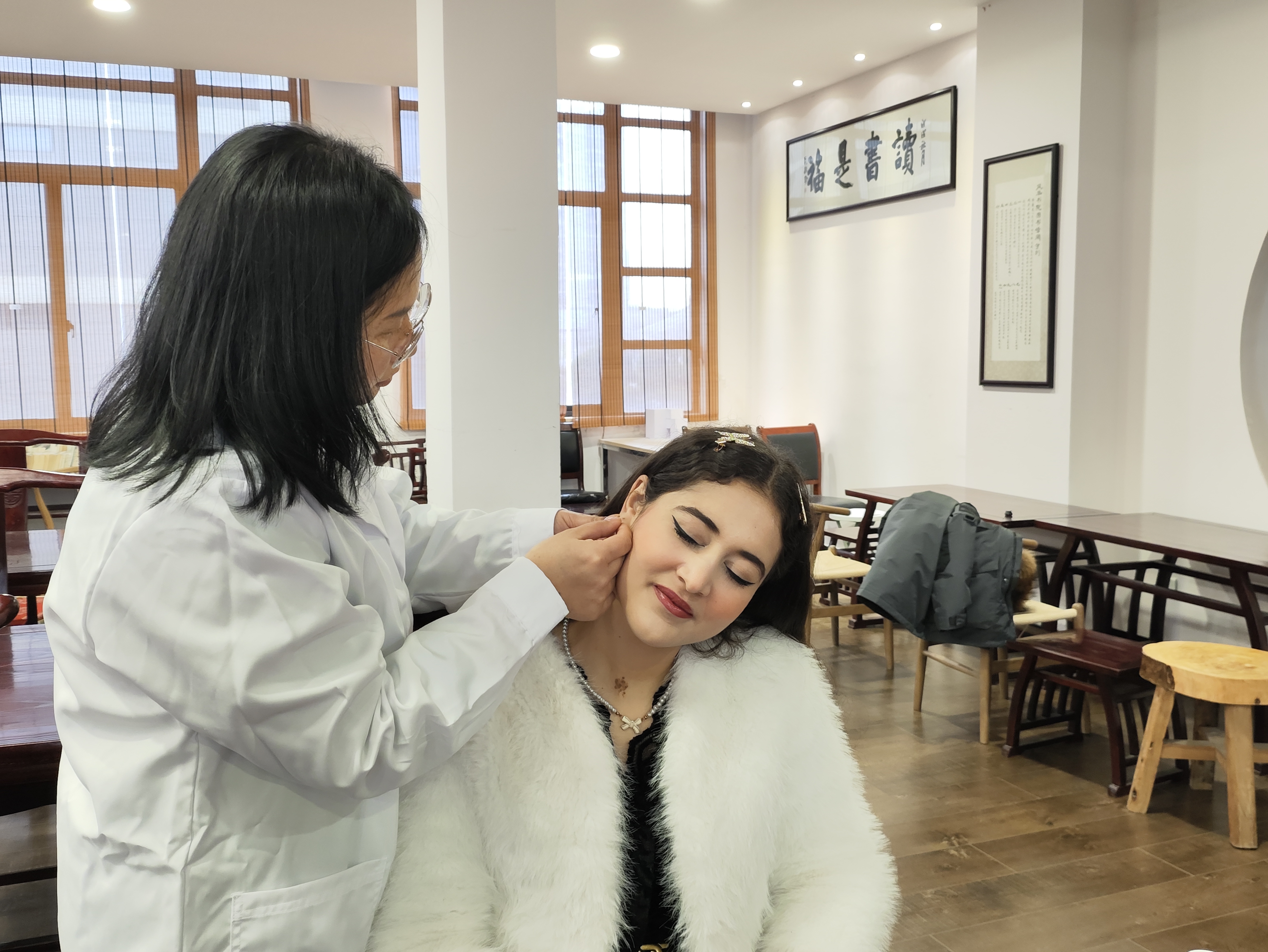
讲解结束后,来自海外的留学生阿德主动体验了耳穴埋豆疗法。中医师将王不留行籽贴敷于其耳廓特定穴位,通过持续刺激实现调理效果,并细致讲解后续按压方法。来自也门的留学生阿德表示,这是他此前从未接触过的治疗方式,“很新奇,也很有意思,让我对中医药有了更直观的认识。”与此同时,来自摩洛哥的女生Kenza尝试了耳针疗法,希望改善面部法令纹问题。她与同伴表示,虽然施针过程中略有疼痛,但当下便能感受到面部紧绷感有所缓解,体验感“出乎意料”。在她的带动下,好友Oumaima也表达了尝试意愿,不少男生则围在中医师身旁,咨询把脉、针灸等传统诊疗方式。
After the introduction, an international student named Ade volunteered to experience auricular acupressure therapy. A TCM practitioner applied Vaccaria seeds to specific points on his ear to achieve therapeutic effects through continuous stimulation, while explaining follow-up care. Ahmed from Yemen said he had never encountered such a treatment before, describing it as "novel and fascinating," and noting that it gave him a more intuitive understanding of TCM. Meanwhile, Kenza, a student from Morocco, tried auricular acupuncture in hopes of improving nasolabial folds. She and her companion said that although the needling caused slight discomfort, they could immediately feel changes in facial tension, calling the experience "surprisingly effective." Encouraged by her experience, her friend Oumaima also expressed interest, while several male students gathered around the practitioners to consult about pulse diagnosis and acupuncture.
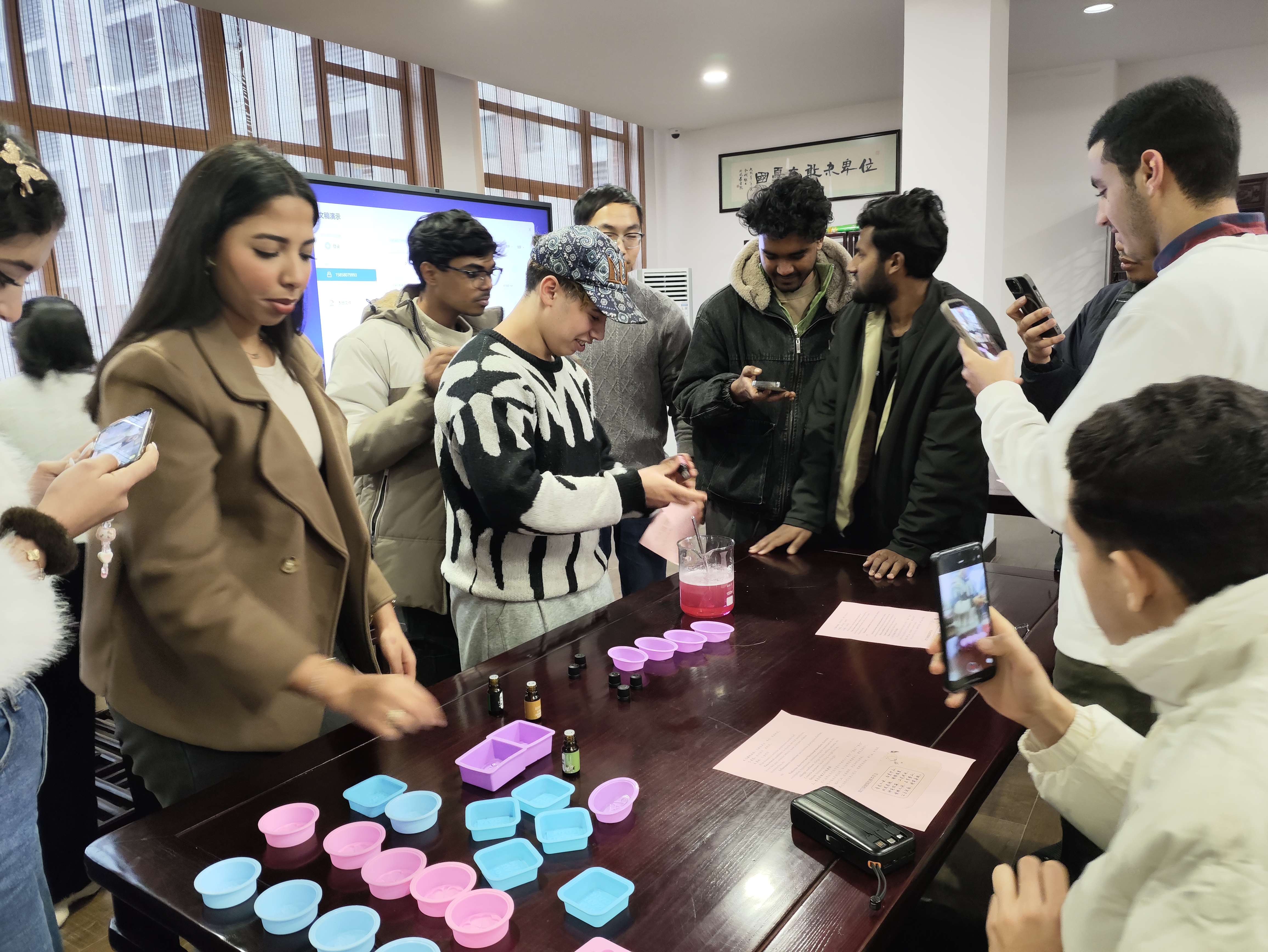
在诊疗体验之外,中医药的生活化应用同样成为活动亮点。实践环节中,中草药香皂制作同步开展。老师们提前将中草药研磨成粉末,与香皂基液调配完成。留学生们围坐在操作台前,挑选自己喜爱的精油香型与模具,完成倒模、除泡等步骤,亲手制作中草药香皂。活动现场,来自伊拉克的留学生利奥与朋友们一起展示了各自完成的香皂成品。他表示,这次活动让原本只存在于书本和想象中的中草药,真正走进了日常生活,“变得触手可及,也更容易理解了。”
Beyond medical therapies, the daily-life applications of TCM also drew attention. During the hands-on session, a herbal soap-making workshop was held. The teachers had prepared powdered Chinese herbs mixed with soap base in advance. Students selected their favorite essential oils and molds, poured the mixture, and removed surface bubbles, creating their own herbal soaps. At the site, international student Leo from Iraq proudly displayed the finished products with his friends. He said the activity made Chinese medicinal herbs—once known only through books or imagination—feel truly close and accessible, bringing their "magic" into everyday life.
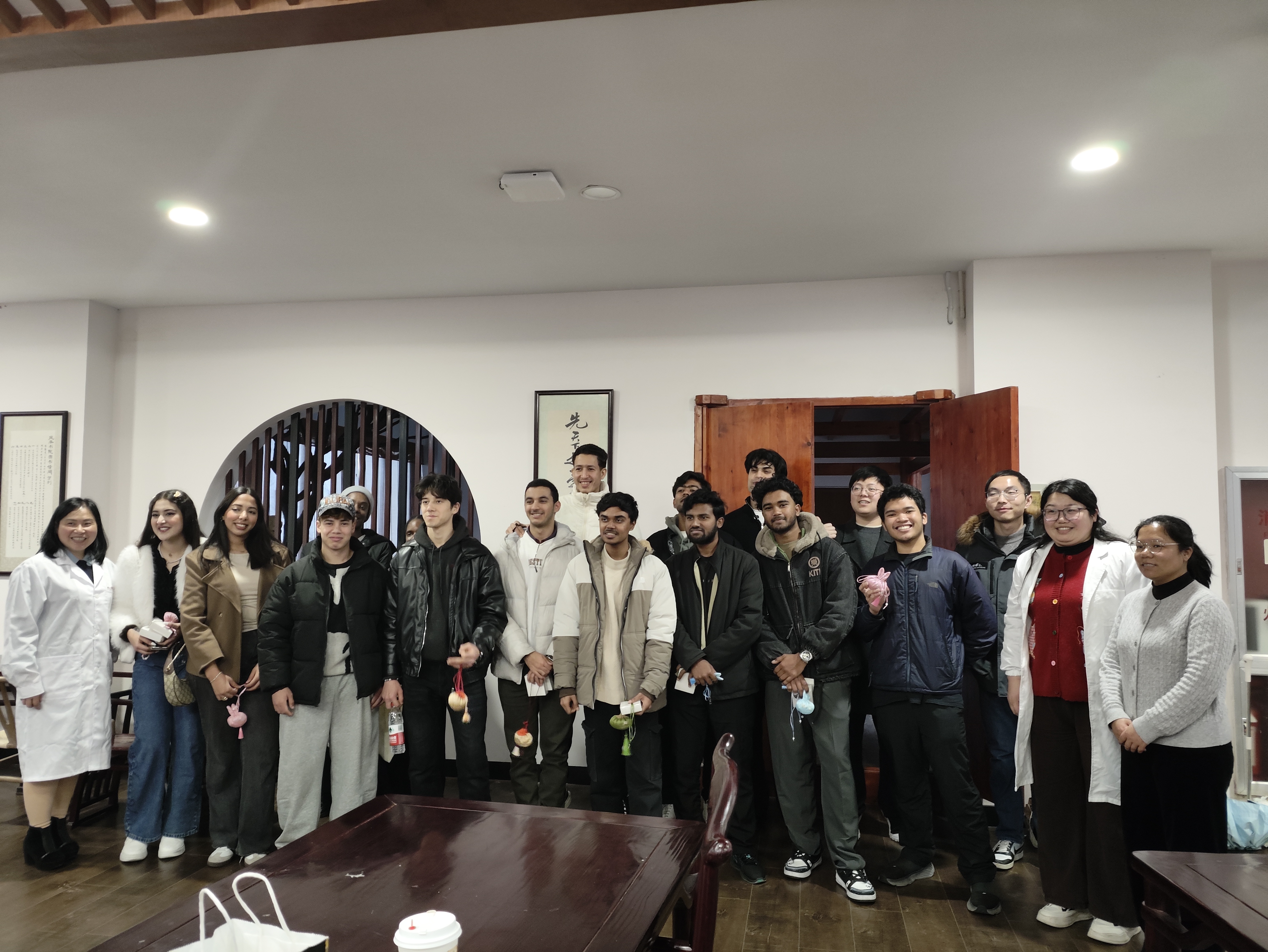
本次“中医药进校园”活动在轻松而热烈的氛围中圆满结束。无论是课堂讲授、诊疗体验,还是手工制作,留学生们始终保持着高度参与热情。中医药不仅是一种医学体系,更是中华传统文化和哲学思想的集中体现。以中医药为载体,让留学生在亲身体验中理解中国、感知中国,也为中华优秀传统文化的国际传播提供了生动而具体的实践路径。
The "TCM on Campus" activity concluded successfully in a relaxed and engaging atmosphere. From lectures to medical experiences and creative workshops, international students remained highly enthusiastic throughout. More than a medical system, TCM embodies the profound wisdom and philosophy of traditional Chinese culture. By serving as a cultural bridge, such activities allow international students to better understand and experience China firsthand, offering a vivid and practical example of how traditional Chinese culture can be shared with the world.
Traditional Chinese Medicine Brought Closer to International Students on Campus



 宁波工程学院官方微信

 宁波工程学院官方微博
 宁波工程学院官方视频号

